
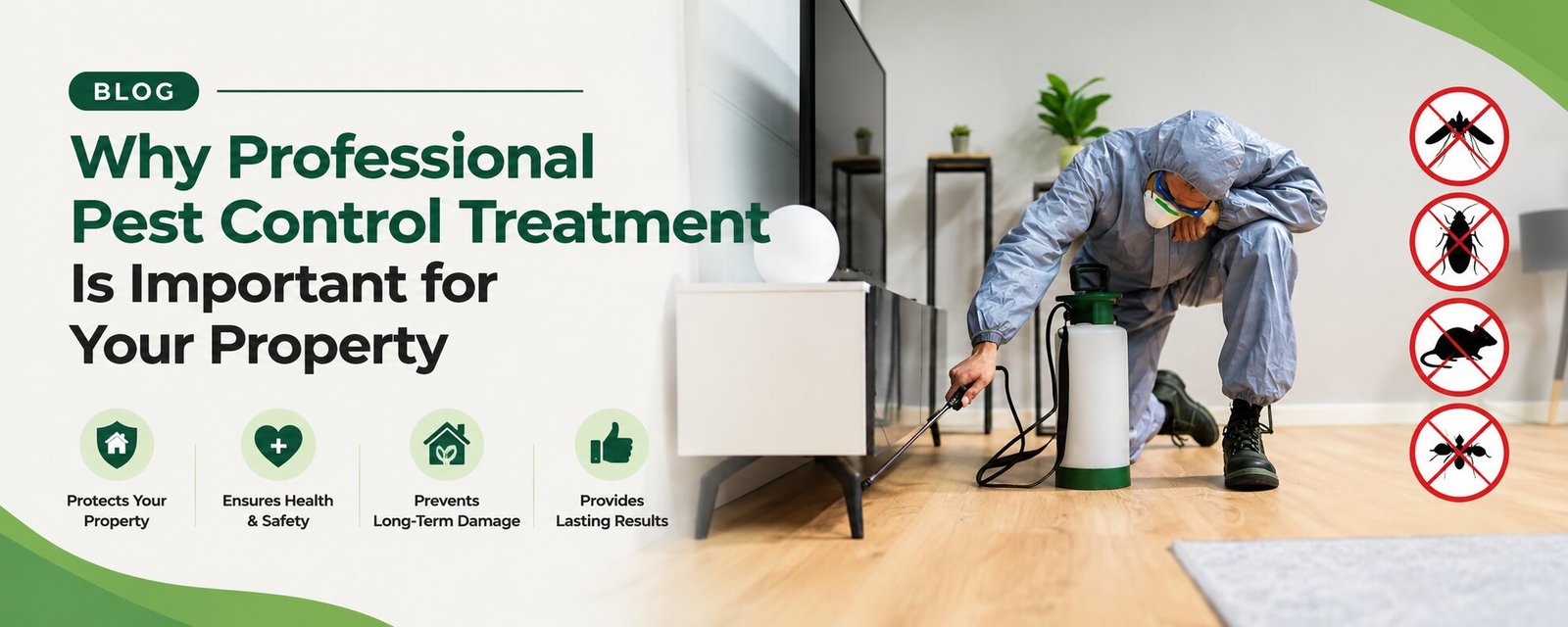
Why Professional Pest Control Treatment Is Important for Your Property
Pests can become a serious problem for homes, offices, shops, warehouses, restaurants, and other commercial properties. Cockroaches, termites, ants, rats, mosquitoes, bed bugs, flies, rodents, and other pests can enter a property through small gaps, drains, windows, doors, cracks, and other access points.
While DIY pest control products may provide temporary relief, they often do not address the actual source of an infestation. Professional pest control treatment takes a more systematic approach by identifying the pest, locating infestation areas, understanding the conditions attracting pests, and selecting an appropriate control method.
Professional pest management can help protect your property, improve hygiene, reduce pest-related risks, and prevent recurring infestations.
What Is Professional Pest Control Treatment?
Professional pest control treatment is a structured process used to identify, control, and prevent unwanted pests in residential and commercial properties.
Instead of simply spraying chemicals wherever pests are visible, professional pest management can involve:
- Property inspection
- Pest identification
- Finding infestation and nesting areas
- Identifying entry points
- Checking food and water sources
- Applying appropriate treatment methods
- Using traps, baits, gels, barriers, or other control techniques where suitable
- Monitoring pest activity
- Recommending preventive measures
- Follow-up treatment when required
A responsible pest management approach is often based on Integrated Pest Management (IPM). The U.S. Environmental Protection Agency describes IPM as an approach that combines monitoring, prevention and appropriate control methods while considering effectiveness and potential risks.
Why Is Professional Pest Control Important?
Pest infestations are not only an inconvenience. Depending on the pest and the property, they can create sanitation problems, damage materials, affect occupants, and interfere with business operations.
Here are some of the major reasons professional pest control treatment is important.
1. Helps Protect Your Property from Pest Damage
Certain pests can cause significant damage to buildings and belongings.
Termites, for example, can attack wood and other cellulose-containing materials. Rodents may chew electrical wiring, insulation, packaging, and other materials. Some insects can damage furniture, fabrics, stored products, and structural components.
Early professional intervention can help identify pest activity before the problem becomes more extensive.
A professional inspection can look beyond the pests you can see and identify signs such as:
- Droppings
- Gnaw marks
- Damaged wood
- Pest eggs or larvae
- Nesting material
- Grease marks
- Entry holes
- Cracks and gaps
- Hidden infestation areas
Detecting these signs early can make pest management easier and potentially reduce the need for more extensive corrective work.
2. Helps Maintain a Healthier Living Environment
Pests can contaminate food, surfaces, and living spaces. Some pests are also associated with organisms that can cause or spread disease.
Rodents are a good example. According to the CDC, rodents can carry diseases that may spread to people through direct contact, bites, or exposure to contaminated urine, saliva, and droppings.
Cockroaches, mosquitoes, flies, rodents, ticks, and other pests can therefore be more than a nuisance.
Professional pest control treatment can help reduce pest populations and the conditions that allow them to survive and reproduce.
3. Provides More Than a Temporary Solution
One of the biggest problems with DIY pest control is that treating visible pests does not necessarily eliminate the underlying infestation.
For example, killing a few cockroaches in the kitchen does not necessarily address:
- Their hiding places
- Food sources
- Moisture
- Breeding areas
- Entry points
- Cracks and gaps
- The wider infestation
Professional pest control focuses on the overall problem rather than only the pests that are visible.
The EPA recommends identifying and monitoring pests, preventing access to food, water and shelter, and selecting appropriate control methods as part of an IPM approach.
4. Helps Identify the Source of the Infestation
Finding the source is one of the most important parts of effective pest management.
Pests may enter a property because of:
- Food waste
- Standing water
- Leaking pipes
- Poor sanitation
- Open garbage
- Structural cracks
- Gaps around doors and windows
- Drain openings
- Vegetation close to buildings
- Moisture problems
- Clutter
- Damaged screens
A professional inspection can help determine why pests are entering or remaining on the property.
Once the contributing conditions are identified, appropriate preventive measures can be recommended.
5. Professional Treatment Can Be More Targeted
Pesticides are not automatically the best solution for every pest problem. The right treatment depends on the pest species, infestation level, location, property type, and other factors.
An IPM-based approach can combine different methods, including:
- Sanitation
- Exclusion
- Traps
- Baits
- Gels
- Physical barriers
- Habitat modification
- Targeted pesticide application when appropriate
The EPA notes that IPM emphasizes prevention and the use of effective, lower-risk options before moving to additional control measures when needed.
This makes professional pest management different from simply applying a general-purpose spray.
6. Helps Control Common Household Pests
Professional pest control can be useful for many types of infestations, including:
Cockroaches
Cockroaches can hide in kitchens, bathrooms, cabinets, drains, cracks, and other dark or damp locations. Professional treatment can combine inspection, sanitation recommendations, targeted products, and monitoring.
Termites
Termites can remain hidden inside or around a property for long periods. Professional termite inspections and appropriate treatment can help identify activity and protect vulnerable areas.
Rats and Mice
Rodents can contaminate areas with droppings and urine and may chew materials, including electrical wiring. The CDC recommends controlling rodent access by removing food, water and shelter opportunities and sealing potential entry points.
Ants
Ant infestations can originate from colonies located inside walls, around foundations, gardens, kitchens, or other areas. Finding the source can be important for long-term control.
Bed Bugs
Bed bug infestations can be particularly difficult to eliminate because they can hide in mattresses, furniture, cracks, and other concealed locations. Professional treatment may require inspection, preparation, treatment, and monitoring. The EPA notes that bed bug control can take time and that multiple visits may sometimes be necessary.
Mosquitoes
Mosquito control involves more than killing adult mosquitoes. Reducing standing water and other breeding opportunities can be an important part of prevention.
Flies
Flies are commonly attracted by food waste, garbage, moisture, and organic material. Professional pest management can help identify breeding sources and reduce fly activity.
7. Saves Time and Effort
Trying multiple DIY products without knowing the type or source of infestation can consume considerable time.
You may buy:
- Sprays
- Powders
- Traps
- Baits
- Repellents
- Foggers
- Other pest control products
But if the infestation source remains untreated, the problem may return.
Professional pest control treatment provides a structured approach, from inspection and identification to treatment and prevention.
8. Helps Prevent Recurring Infestations
Effective pest control is not only about eliminating pests that are already present. Prevention is equally important.
A professional may recommend measures such as:
- Sealing cracks and gaps
- Repairing damaged screens
- Fixing water leaks
- Improving waste management
- Keeping food in sealed containers
- Removing standing water
- Reducing clutter
- Improving sanitation
- Installing physical barriers
- Maintaining drainage areas
The EPA recommends eliminating sources of food, water, and shelter and sealing potential entryways to reduce the chances of pests establishing themselves inside a property.
9. Protects Commercial Properties and Business Operations
Pest problems can be particularly damaging for businesses.
Restaurants, hotels, warehouses, offices, hospitals, retail stores, food-processing facilities, and other commercial properties may face operational and reputational problems if pests are discovered.
A pest infestation can affect:
- Customer confidence
- Employee comfort
- Hygiene standards
- Stored products
- Business operations
- Property appearance
- Brand reputation
For commercial properties, regular inspection and preventive pest management can help detect problems before they become larger infestations.
10. Helps Protect Stored Food and Products
Pests can contaminate or damage stored food, packaging, fabrics, paper products, and other materials.
Restaurants, grocery stores, food businesses, warehouses, and homes can be particularly vulnerable when food is improperly stored or waste is not managed properly.
Good pest management combines treatment with preventive practices such as:
- Proper food storage
- Regular cleaning
- Timely waste removal
- Sealed garbage containers
- Cleaning spills and crumbs
- Moisture control
- Sealing entry points
These preventive practices are consistent with IPM principles recommended by the EPA.
11. Professional Pest Control Can Improve Property Hygiene
A pest-free property is easier to maintain as a clean and comfortable environment.
Pests can leave behind:
- Droppings
- Eggs
- Body parts
- Odors
- Nesting materials
- Contaminated surfaces
- Food contamination
Controlling the infestation and addressing the conditions that attract pests can support better property hygiene.
However, pest treatment should complement—not replace—regular cleaning, sanitation, maintenance, and proper waste management.
12. Helps Detect Problems You May Not Notice
Many pest infestations remain hidden.
You may not see a termite colony inside a wall, rodents moving through concealed areas, or bed bugs hiding in furniture.
Some warning signs include:
- Unusual sounds at night
- Pest droppings
- Gnawed materials
- Damaged wood
- Unpleasant odors
- Small holes
- Pest eggs
- Shed skins
- Grease marks
- Repeated sightings of insects
Professional inspections can help uncover these less obvious signs.
Professional Pest Control vs. DIY Pest Control
DIY pest control can be useful for minor preventive measures, but professional treatment can be more appropriate when the infestation is persistent, widespread, difficult to identify, or located in inaccessible areas.
| DIY Pest Control | Professional Pest Control |
|---|---|
| Usually treats visible pests | Investigates the wider infestation |
| Limited knowledge of pest behavior | Uses pest identification and inspection |
| May provide temporary relief | Focuses on control and prevention |
| May use general products | Can select targeted treatment methods |
| Limited monitoring | Can include follow-up and monitoring |
| Homeowner manages the process | Trained professionals manage treatment |
The EPA recommends carefully selecting pest control professionals and considering companies with experience in Integrated Pest Management.
What Happens During Professional Pest Control Treatment?
A typical professional pest management process may include several stages.
Step 1: Property Inspection
The technician examines areas where pests are present or likely to be active.
Step 2: Pest Identification
Correctly identifying the pest helps determine the appropriate treatment strategy.
Step 3: Infestation Assessment
The technician evaluates the severity and location of the infestation.
Step 4: Identify Contributing Conditions
The inspection may identify food, water, shelter, moisture, clutter, cracks, or entry points that support pest activity.
Step 5: Treatment Selection
Depending on the pest and property, the treatment may involve traps, baits, gels, physical controls, exclusion, targeted applications, or other suitable methods.
Step 6: Treatment Application
The selected treatment is applied according to the appropriate instructions and safety requirements.
Step 7: Monitoring and Follow-Up
Some pest problems require monitoring or repeat treatment. This is particularly important for infestations that involve multiple life stages or hidden nesting areas.
Is Professional Pest Control Treatment Safe?
Professional pest control should always prioritize correct product selection, appropriate application, and occupant safety.
Pesticides are designed to affect pests and can pose risks if they are misused. The EPA recommends following product labels and using pesticides appropriately.
When hiring a pest control company, ask about:
- Company credentials and licensing where applicable
- Treatment methods
- Products being used
- Preparation requirements
- Safety instructions
- Re-entry requirements
- Treatment duration
- Follow-up procedures
- Warranty or service terms, if offered
Do not assume that using more pesticide means better pest control. Effective pest management should focus on using the appropriate method for the specific pest problem.
How to Prepare Your Property for Pest Control Treatment
Preparation requirements depend on the type of pest and treatment being performed. Your pest control professional should provide specific instructions.
Common preparation steps may include:
- Remove or cover exposed food.
- Clean food crumbs and spills.
- Store food in sealed containers.
- Remove unnecessary clutter.
- Keep children and pets away from treatment areas as instructed.
- Repair or report water leaks.
- Make affected areas accessible to the technician.
- Follow all pre-treatment instructions.
- Follow post-treatment ventilation or re-entry instructions when applicable.
For certain infestations, preparation can be an important part of treatment success. For example, bed bug treatment may require cleaning, laundering, decluttering, and other preparation steps.
How to Choose the Right Pest Control Company
Choosing the right pest control provider can make a significant difference in the quality of treatment.
Before hiring a company, consider the following:
1. Experience
Choose a company with experience handling the specific pest affecting your property.
2. Inspection Process
A good provider should understand the importance of identifying the pest and assessing the infestation before selecting a treatment.
3. Treatment Approach
Ask whether the company uses an integrated pest management approach and what non-chemical or preventive measures may be appropriate.
4. Safety Practices
Ask about the products used, application procedures, preparation requirements, and safety precautions.
5. Follow-Up Support
Some infestations require more than one treatment. Ask whether follow-up inspections or treatments are available.
6. Transparent Pricing
Request a clear explanation of what the service includes before agreeing to treatment.
7. Reviews and Reputation
Check customer reviews and local reputation, but also consider the company’s experience, communication, treatment process, and service terms.
How Often Should Pest Control Treatment Be Done?
There is no single schedule that works for every property.
Treatment frequency depends on factors such as:
- Pest species
- Infestation level
- Property type
- Location
- Climate
- Building condition
- Food and waste management
- Moisture levels
- Previous infestation history
- Preventive measures
Some properties may require one-time treatment, while others may benefit from regular inspection and preventive pest management.
A professional can recommend a treatment schedule based on the specific conditions of the property.
Tips to Prevent Pest Infestations
Professional treatment works best when combined with good property maintenance.
Keep Food Properly Stored
Use sealed containers and avoid leaving food exposed.
Manage Waste Properly
Remove garbage regularly and keep waste containers properly closed.
Fix Water Leaks
Moisture can attract many types of pests. Repair leaking taps, pipes, drains, and other sources of excess moisture.
Seal Entry Points
Check cracks, gaps, doors, windows, vents, pipes, and other potential entry points.
Remove Standing Water
Check plant trays, buckets, drains, gutters, and other areas where water can accumulate.
Reduce Clutter
Decluttering can remove potential hiding and nesting places.
Maintain Cleanliness
Clean kitchens, storage areas, bathrooms, and other pest-prone areas regularly.
Inspect Your Property Regularly
Look for droppings, gnaw marks, damaged wood, insects, holes, and other signs of pest activity.
These preventive measures align with IPM principles that emphasize eliminating food, water, shelter, and access points before relying solely on pesticides.
When Should You Call a Professional Pest Control Service?
Consider contacting a professional if:
- You repeatedly see pests.
- Pest activity is increasing.
- You find droppings or nesting material.
- You notice termite damage.
- You hear rodents inside walls or ceilings.
- DIY treatment has not worked.
- Pests are returning after treatment.
- You find pests in food-storage areas.
- The infestation has spread to multiple rooms.
- You are unsure what type of pest you are dealing with.
- The infestation is difficult to access or control safely.
Early action can be particularly useful because some infestations become more difficult to manage after pests have established breeding or nesting sites. The CDC notes that controlling rodents before they become established in a building is easier.
In addition to providing professional pest control treatment, Ultra Pest Solution also serves customers across multiple cities and locations. Our services include Pest control treatment services in Vadodara, Pest control treatment services in Vapi, Pest control treatment service in Surat, Pest control services in Ankleshwar, Pest control services in Bharuch, Pest control services in Valsad, Pest control services in Silvassa, Pest control treatment in Mumbai, and Pest Control Treatment in Daman.
Final Thoughts
Professional pest control treatment is important for protecting your property from unwanted pests, potential damage, sanitation problems, and recurring infestations. A professional approach goes beyond simply killing visible insects or rodents. It focuses on identifying the pest, finding the source, selecting appropriate control methods, and preventing future activity.
Whether you are dealing with cockroaches, termites, rats, ants, mosquitoes, bed bugs, flies, or other pests, professional pest management can provide a more structured solution than relying only on DIY products.
For the best long-term results, combine professional pest treatment with regular cleaning, proper food storage, waste management, moisture control, property maintenance, and sealing of potential pest entry points.
Frequently Asked Questions About Professional Pest Control Treatment
1. Why is Professional Pest Control Better than DIY Treatment?
Professional pest control involves pest identification, inspection, targeted treatment, and prevention. DIY products may help with minor problems but may not address hidden infestation sources or recurring conditions.
2. How Long Does Professional Pest Control Treatment Take?
Treatment time depends on the pest, property size, infestation level, and treatment method. A technician can provide a more accurate estimate after inspecting the property.
3. Is One Pest Control Treatment Enough?
Not always. Some infestations may require follow-up treatment or monitoring, particularly when pests have hidden nesting areas or multiple life stages.
4. Can Professional Pest Control Prevent Pests from Returning?
Professional treatment can help reduce pest activity, while preventive measures such as sealing entry points, eliminating food and water sources, and maintaining cleanliness can reduce the chance of reinfestation.
5. What Pests Can Professional Pest Control Companies Treat?
Depending on the provider, services may include cockroach control, termite control, rat and mouse control, ant control, mosquito control, bed bug treatment, fly control, bird control, flea and tick treatment, and other pest management services.
6. Should I Leave My Property During Pest Control Treatment?
This depends on the treatment method and products used. Always follow the pest control professional’s specific preparation and re-entry instructions.
7. How Can I Prevent Pests after Treatment?
Keep food sealed, remove garbage regularly, fix leaks, eliminate standing water, reduce clutter, maintain cleanliness, and seal cracks and other possible entry points.
8. Is Professional Pest Control Suitable for Commercial Properties?
Yes. Professional pest management can be particularly valuable for restaurants, offices, hotels, warehouses, retail stores, food businesses, and other commercial properties where pest problems can affect hygiene and operations.
9. What is Integrated Pest Management?
Integrated Pest Management, or IPM, is a pest management approach that combines monitoring, prevention, environmental modifications, physical controls, and appropriate chemical treatments when necessary.
10. When Should I Contact a Pest Control Professional?
Contact a professional when pest activity is persistent, widespread, difficult to identify, causing property damage, or not responding to reasonable DIY measures.