
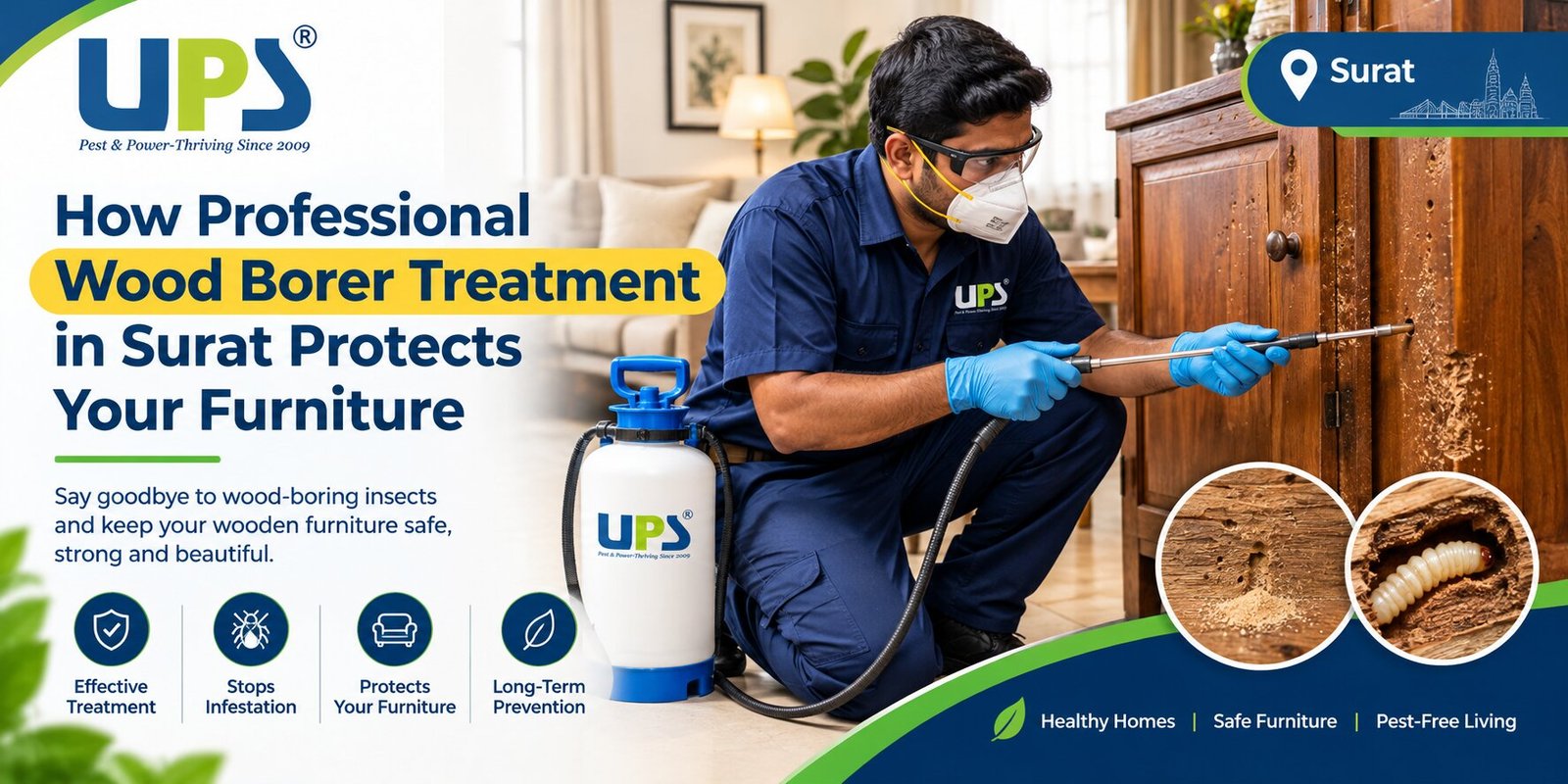
How Professional Wood Borer Treatment in Surat Protects Your Furniture
Wooden furniture adds beauty, comfort, and value to every home. From wardrobes and beds to dining tables, wooden doors, cabinets, and office furniture, these items are an important part of residential and commercial interiors. However, wood-boring insects can gradually damage wooden furniture from the inside, often without showing obvious signs during the early stages.
If you notice tiny holes, fine wood powder, or weakening wooden surfaces, your furniture may be affected by wood borers. Ignoring these warning signs can allow the infestation to continue and increase the need for costly repairs or replacement.
Professional wood borer control services in Surat can help identify the infestation, control the insects, and protect vulnerable wooden items from further damage. Ultrapest Solution provides pest control services designed to help homeowners and businesses manage wood borer problems with suitable treatment and prevention strategies.
In this guide, we explain how wood borers damage furniture, the signs of infestation, professional treatment methods, and practical ways to protect your valuable wooden belongings.
What Are Wood Borers?
Wood borers are wood-damaging insects, commonly the larvae of certain beetles, that feed and develop inside timber. Depending on the species, they may attack hardwood furniture, wooden flooring, cupboards, doors, window frames, decorative panels, and other wooden structures.
The insects can remain hidden within the wood for months or longer. During this period, their larvae create tunnels that gradually affect the wood’s internal structure. Adult beetles may eventually emerge through small holes in the surface.
Because the damage develops inside the wood, furniture may appear normal from the outside even when an infestation is progressing internally.
According to university extension resources, common signs of wood-boring beetles include small exit holes, powdery wood residue, and damage to furniture or other wooden materials.
Common Signs of Wood Borer Infestation in Furniture
Recognizing the early warning signs can help you arrange treatment before the damage becomes extensive.
1. Small Holes in Wooden Surfaces
Tiny, round holes on wardrobes, beds, tables, cupboards, or wooden doors may indicate that adult wood-boring beetles have emerged from the wood. The size and pattern of the holes can vary depending on the insect species.
2. Fine Wood Powder Near Furniture
Fine, powder-like material collecting beneath furniture or around small holes is often called frass. It can contain wood fragments and insect waste produced by wood-boring larvae.
If fresh powder repeatedly appears after cleaning, it may indicate ongoing insect activity. However, old residue can also remain after an infestation has stopped, so further inspection may be necessary.
3. Weak or Damaged Wooden Areas
As larvae create tunnels inside wood, affected sections may become weak, brittle, or crumbly. Extensive damage can affect the strength and usability of furniture.
4. Repeated Appearance of New Holes
New holes appearing over time may indicate that adult beetles are emerging from the wood. A professional inspection can help determine whether the infestation remains active.
5. Damage Around Joints and Edges
Furniture joints, corners, untreated surfaces, and small cracks can provide suitable places for some wood-boring beetles to lay eggs. Inspect these areas carefully, especially if other warning signs are p
Important: Not every hole or patch of wood dust indicates an active infestation. Proper identification helps determine the right treatment.
Why Is Wood Borer Treatment Important for Your Furniture?
Wood borers can cause more than cosmetic damage. Their activity may gradually reduce the strength, appearance, and useful life of wooden items.
Here are the main reasons to consider professional wood borer control treatment.
1. Helps Control Hidden Insects
One of the biggest challenges with wood borers is that the larvae develop inside the wood. Ordinary surface cleaning cannot reach insects hidden deep within internal tunnels.
Professional treatment methods are selected according to the type of wood, infestation level, surface finish, and accessibility of the affected areas.
2. Reduces Further Wood Damage
When an active infestation is identified and treated appropriately, further insect damage can be reduced. Early intervention may help preserve furniture that might otherwise require extensive repairs or replacement.
3. Helps Protect Expensive Furniture
Solid-wood beds, wardrobes, antique furniture, dining tables, and custom-made cabinets can represent a significant investment.
Timely wood borer pest control can help protect these items and reduce the risk of ongoing damage.
4. Supports Longer Furniture Life
Combining suitable treatment with moisture management, routine inspection, and protective wood finishes can help maintain wooden furniture over time.
5. Helps Identify Other Affected Areas
Wood borers may affect more than one item. A thorough inspection can identify other potentially infested furniture, door frames, wooden panels, or accessible timber before the problem becomes more w
How Professional Wood Borer Treatment in Surat Protects Your Furniture
Professional treatment follows a systematic approach rather than relying only on spraying the visible surface. The precise method depends on the insect species, the extent of damage, and the construction and finish of the furniture.
Step 1: Detailed Inspection of Wooden Furniture
The first step is to inspect the affected furniture and surrounding wooden structures.
A pest control professional may examine:
- Wooden beds, wardrobes, and cupboards
- Dining tables, chairs, and cabinets
- Wooden doors and window frames
- Decorative panels and wooden flooring
- Visible holes, powder deposits, cracks, and weakened sections
The purpose is to assess the likely source of the problem, determine the extent of damage, and identify an appropriate treatment approach.
Step 2: Selecting the Appropriate Treatment
Different wood-boring insects and furniture conditions may require different solutions. The professional should consider whether the wood is painted, polished, varnished, or unfinished.
Depending on the inspection, treatment may involve localized application, targeted injection, surface treatment, specialist treatment of removable furniture, or replacement of severely damaged wood.
Not every infestation requires the same procedure.
Step 3: Targeted Wood Borer Injection Treatment
Where appropriate, a professional may apply a suitable wood-borer treatment product into existing holes or carefully selected access points.
This approach aims to deliver the treatment to affected areas where insects may be hiding. It is important to use a product approved for the intended application and follow its label instructions.
Injection treatment is not suitable for every type of wood or infestation, and its effectiveness depends on factors such as penetration, insect species, and the extent of internal damage.
Step 4: Surface Treatment of Suitable Wooden Areas
A suitable surface treatment may be applied to accessible, affected, or vulnerable wood, depending on the product and the condition of the furniture.
Surface treatments can help control accessible insects and may provide preventive protection where the product is appropriate. However, a surface application alone may not eliminate larvae deep inside finished or sealed wood.
Step 5: Repairing and Restoring Damaged Furniture
After treatment and once the wood is suitable for repair, affected holes and surface damage can be filled, sanded, or refinished as appropriate.
Furniture with extensive internal damage may need reinforcement or replacement of the affected section. Pest treatment controls insects; it does not automatically restore wood that has already lost its strength.
Step 6: Follow-Up Inspection and Prevention Advice
Follow-up monitoring can help determine whether signs of active infestation continue. Your pest control professional can also recommend suitable maintenance, sealing, or additional treatment if required.
The aim is to control the current infestation and reduce the likelihood of future problems.
Why Choose Professional Wood Borer Control Instead of DIY Treatment?
Homeowners sometimes try household sprays, furniture polish, or other remedies after noticing tiny holes in their furniture. These approaches may improve the appearance of the surface but do not necessarily reach larvae living inside the wood.
Consider the following differences:
| DIY methods | Professional treatment |
|---|---|
| Often limited to visible surfaces | Selected according to the infestation and wood condition |
| May not reach internal tunnels | Can include targeted treatment where appropriate |
| May overlook other affected furniture | Can include inspection of surrounding wooden items |
| May not identify the insect correctly | Assessment helps distinguish wood borers from other causes |
| Usually provides limited guidance on monitoring | Can include follow-up and prevention recommendations |
For valuable, antique, extensively damaged, or repeatedly affected furniture, professional assessment is particularly worthwhile.
Avoid injecting household chemicals, kerosene, or unapproved pesticides into furniture. These substances can create health and fire hazards, damage finishes, and fail to control the infestation.
How to Prevent Wood Borer Infestation in Your Home
Professional treatment is only one part of protecting your furniture. Good maintenance and early detection can help reduce future risks.
1. Keep Wooden Furniture Dry
Repair water leaks and avoid allowing moisture to accumulate around wooden furniture. Improve ventilation in areas where dampness persists.
Moisture conditions affect the suitability of wood for some wood-boring beetles, although different species have different requirements.
2. Inspect New and Second-Hand Furniture
Before bringing new, antique, or second-hand wooden items into your home, check for tiny holes, powdery residue, and signs of damage.
3. Maintain Protective Wood Finishes
Paint, varnish, shellac, and other suitable finishes can help seal exposed pores and cracks on susceptible wood. They can reduce opportunities for some beetles to lay eggs, but should not be considered a cure for an established infestation.
4. Arrange Timely Inspections
Check the undersides, corners, joints, and backs of furniture periodically. Early inspection can help you recognize developing problems before damage becomes extensive.
5. Do Not Ignore Reappearing Wood Powder
If fine powder continues to appear after cleaning, investigate the cause rather than repeatedly removing the residue.
6. Repair or Replace Severely Damaged Wood
Wood that has become structurally weak may not be recoverable through insect treatment alone. Ask a qualified professional whether repair, reinforcement, or replacement is the most practical option.
Why Choose Ultrapest Solution for Wood Borer Treatment in Surat?
If you suspect wood borers in your furniture, choosing a suitable pest control service is an important step towards protecting your home or workplace.
Ultrapest Solution provides professional wood borer control and treatment services in multiple cities, including Wood borer control treatment services in Vapi, Wood borer control treatment in Ankleshwar, Wood borer control treatment in Valsad, professional wood borer control in Bharuch, Wood borer control services in Mumbai, professional Wood borer control in Silvassa, and professional Wood borer control in Daman. We offer suitable wood borer treatment solutions to help protect wooden furniture, doors, cupboards, and other wooden structures from wood-boring insect damage in residential and commercial properties.
When arranging wood borer treatment, customers should look for the following factors:
- Inspection-Based Solutions: Treatment recommendations based on the affected wood and signs of infestation.
- Suitable Treatment Methods: An approach selected according to the furniture’s condition, finish, and infestation severity.
- Safety-Conscious Application: Clear instructions about preparation, ventilation, personal safety, and when treated areas can be used again.
- Practical Prevention Advice: Recommendations for furniture maintenance, moisture control, and monitoring.
- Clear Service Information: An explanation of the proposed treatment, expected results, limitations, and any follow-up arrangements.
Ultrapest Solution aims to help homeowners and businesses address wood borer problems and protect their wooden belongings through appropriate pest management.
For service enquiries, contact Ultrapest Solution to discuss your wood borer concerns and arrange an assessment.
Wood Borer Treatment Services in Surat for Homes and Businesses
Wood borers can affect both residential and commercial properties. Timely inspection and appropriate treatment can help manage infestations in different types of wooden fixtures and furniture.
Professional wood borer control may be relevant for:
- Homes, apartments, and villas
- Offices and commercial premises
- Shops and showrooms with wooden interiors
- Furniture-heavy rental properties
- Hotels and other accommodation businesses
- Properties with wooden doors, cabinets, panels, or flooring
Whether you have noticed a few holes in a cupboard or repeated powder deposits around several wooden items, an inspection can help establish the extent of the issue and the next steps.
Conclusion
Wood borers can quietly damage furniture from the inside, affecting its appearance, strength, and useful life. Small holes and fine wood powder may be early clues, so it is worth investigating these signs before the damage becomes extensive.
Professional wood borer treatment in Surat can help identify the cause, select a suitable treatment method, control active insects, and provide guidance on preventing future infestations. Regular inspection, moisture management, and proper furniture maintenance are also important parts of long-term protection.
If you notice signs of wood borers in your home or office, contact Ultrapest Solution to discuss your concerns and explore suitable wood borer control treatment options for your property.
Protect your furniture today with early detection, appropriate treatment, and preventive care.
FAQs
1. What are the Signs of Wood Borers in Furniture?
Common signs include small round holes, fine powdery residue, new exit holes, and weakened or crumbly wood.
2. Can Wood Borers Damage Wooden Furniture from the Inside?
Yes. The larvae of many wood-boring beetles feed inside wood and create tunnels that may weaken furniture over time.
3. Is Professional Wood Borer Treatment Effective?
Appropriate professional treatment can control an infestation, but results depend on the insect species, treatment method, accessibility of the affected wood, and severity of damage. Follow-up monitoring may be needed.
4. Does Wood Borer Treatment Damage Furniture Polish?
Some products or application methods may affect paint, polish, varnish, or other finishes. Discuss the furniture’s finish with the technician before treatment and request a suitable approach.
5. How Long Does Wood Borer Treatment Take?
The duration depends on the number of affected items, the treatment method, and the severity of the infestation. Ask the service provider for an estimate after inspection.
6. Can I Prevent Wood Borers from Returning?
You can reduce the risk by keeping wood dry, maintaining suitable protective finishes, inspecting new furniture, and monitoring previously affected areas. No preventive method guarantees that reinfestation will never occur.
7. Should I Replace Furniture Affected by Wood Borers?
Not always. Furniture with limited damage may be treatable and repairable. If the wood is extensively weakened, replacement or structural repair may be more appropriate.
8. When should I Contact a Wood Borer Pest Control Service in Surat?
Seek professional advice when powder repeatedly appears, new holes develop, multiple items are affected, or the furniture is valuable and you want to avoid inappropriate DIY treatment.