
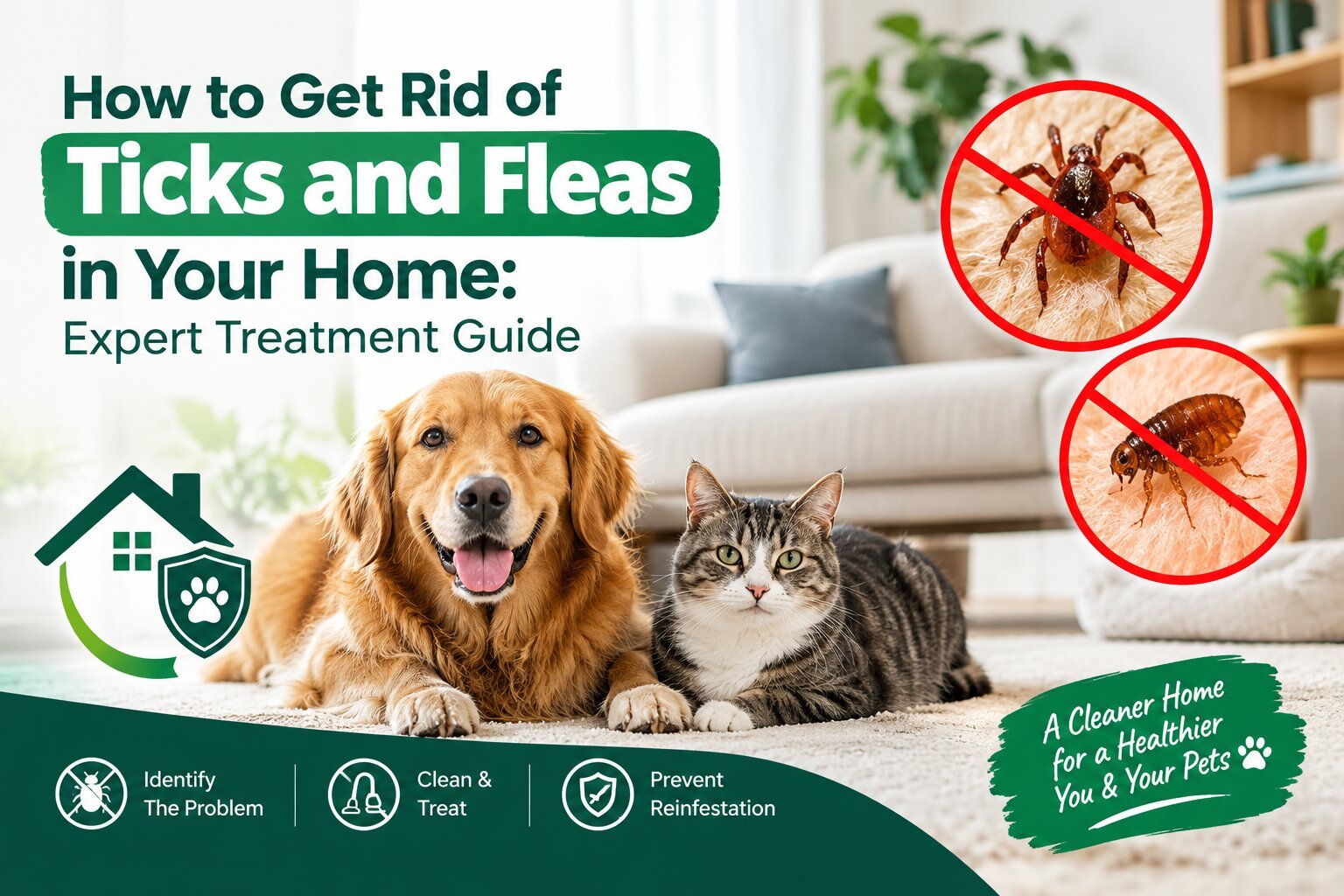
How to Get Rid of Ticks and Fleas in Your Home: Expert Treatment Guide
Ticks and fleas are common household pests that can cause discomfort, irritation, and ongoing problems for families and pets. These tiny parasites can enter your home through pets, outdoor areas, contaminated bedding, and contact with infested animals. Once established, they can be difficult to eliminate without a systematic approach.
If you notice your pet scratching frequently, small jumping insects on carpets, or tick-like pests near pet bedding, it is important to identify the problem and take appropriate action.
In this complete guide, we explain how to get rid of ticks and fleas in your home, recognise the warning signs of an infestation, choose appropriate treatment methods, and prevent these pests from returning. We also explain when professional pest control services may be helpful.
Ultrapest Solution provides ticks and fleas control services as part of its pest control offerings. If you are experiencing a persistent infestation, professional assistance may help you identify affected areas and develop a suitable treatment plan.
What Are Ticks and Fleas?
Ticks and fleas are parasites that feed on the blood of animals and, in some circumstances, humans. Although both pests can be associated with pets and household environments, their appearance, behaviour, and control requirements differ.
What Are Fleas?
Fleas are small, wingless insects that can jump considerable distances relative to their body size. They commonly infest dogs, cats, and other animals, and may spread into areas where pets rest.
Fleas can hide in carpets, rugs, upholstery, pet bedding, floor gaps, and other protected locations. Their eggs and immature stages can remain in the environment, making an infestation difficult to eliminate through a single cleaning session.
Flea bites may cause itching, irritation, and discomfort. Some flea species can also transmit disease-causing organisms. The health risks depend on the species and local circumstances.
What Are Ticks?
Ticks are small, blood-feeding arachnids related to spiders and mites. Unlike fleas, they do not jump. They typically attach themselves to a host when an animal or person passes through an area where ticks are present.
Ticks may enter a home on pets, clothing, equipment, or other animals. Depending on the species, they can attach to a host and feed for an extended period.
Some ticks transmit pathogens that cause illness. Therefore, attached ticks should be removed promptly and carefully, and medical advice should be sought when symptoms or other risk factors warrant it.
7 Common Signs of Ticks and Fleas in Your Home
Early identification is important because these pests can multiply or continue entering the home if the source remains untreated.
1. Frequent Scratching by Pets
Dogs and cats may scratch, bite, lick, or groom themselves excessively when fleas or ticks are present. However, itching can have other causes, so a veterinarian should help confirm the problem.
2. Small Jumping Insects
Fleas may be visible jumping on pet bedding, rugs, carpets, sofas, or around areas where pets sleep.
3. Small Dark Specks on Pet Bedding
Flea droppings can appear as tiny dark specks. When collected and moistened on a white tissue, flea dirt may leave a reddish-brown stain because it contains digested blood.
4. Ticks on Pets or Clothing
Inspect pets after outdoor activity, especially around the ears, neck, under the collar, between the toes, and other areas where ticks may attach.
5. Itchy Bites on Family Members
Flea bites may appear as small, itchy bumps, often around the ankles or lower legs. Skin reactions vary, and bites alone cannot reliably identify the pest.
6. Pests Around Pet Sleeping Areas
Pet beds, blankets, rugs, and nearby furniture may harbour fleas and their immature stages. These areas deserve particular attention during cleaning and inspection.
7. Repeated Pest Sightings After Cleaning
If fleas continue appearing after vacuuming or washing bedding, the infestation may involve hidden developmental stages or untreated animals. Repeated tick sightings may indicate that pets or animals are continuing to
Important: Identifying the pest correctly is the first step. Fleas and ticks require different control measures, and other small household pests can sometimes be mistaken for them.
How to Get Rid of Fleas in Your Home
Successful flea control usually requires coordinated cleaning, appropriate pet treatment, environmental treatment when needed, and follow-up. Treating only the visible adult fleas may not eliminate eggs, larvae, and pupae.
The US Centers for Disease Control and Prevention recommends a combined approach involving sanitation, treatment of pets, treatment of the environment, and follow-up.
Step 1: Vacuum Floors, Carpets, and Furniture
Vacuuming helps remove adult fleas, eggs, larvae, and debris from areas where pets spend time.
Concentrate on:
- Carpets and rugs
- Sofa cushions and upholstered furniture
- Edges of walls and skirting boards
- Floor cracks and crevices
- Areas beneath beds and furniture
- Pet sleeping and resting areas
Vacuum frequently during the control period. Empty the vacuum container or dispose of the bag safely according to the manufacturer’s instructions, preferably outside the living area.
Vacuuming alone may not eliminate an established infestation, but it is an important part of an integrated treatment plan.
Step 2: Wash Pet Bedding and Household Fabrics
Wash pet bedding, removable covers, blankets, and other washable fabrics used by pets.
Use a suitable wash cycle and temperature for the material. Dry items thoroughly according to their care instructions.
If bedding is heavily infested and cannot be cleaned effectively, consider replacing it.
Continue cleaning regularly because flea eggs and immature stages may remain in the environment.
Step 3: Treat All Household Pets Appropriately
If pets are present, environmental cleaning should be coordinated with suitable flea treatment for each animal.
Consult a veterinarian to choose an appropriate product based on the animal’s species, age, weight, health, and other medications.
Never assume that a product suitable for dogs is also safe for cats. Some ingredients used in dog flea treatments can be highly toxic to cats.
Do not apply household insecticides to pets, and never exceed the dose or frequency specified on an animal treatment product.
Treating the home without addressing infested pets can allow fleas to return.
Step 4: Identify Flea Hiding Places
Fleas and their immature stages may be present in places that receive less frequent cleaning.
Inspect:
- Pet bedding and blankets
- Carpet edges
- Furniture seams
- Cushions and rugs
- Floor gaps
- Shaded outdoor areas where pets rest
Flea larvae can develop in protected areas containing organic debris. Concentrating cleaning efforts on these locations can improve the overall treatment process.
Step 5: Consider Professional Flea Treatment
If fleas continue appearing despite regular cleaning and appropriate pet treatment, professional pest control may be worth considering.
A pest control professional can assess the affected areas, identify likely harbourage locations, and determine whether an appropriate environmental treatment is necessary.
Treatment should be selected according to the infestation, site conditions, and product label. Occupants and pets should follow all preparation, re-entry, and ventilation instructions.
Step 6: Follow Up and Monitor the Infestation
A single treatment may not be enough to eliminate fleas because their life cycle includes stages that are less susceptible to certain treatments.
Continue vacuuming, washing bedding, and monitoring the affected areas. Follow the product instructions and any professional recommendations for repeat treatment.
Do not repeat pesticide applications more frequently than the label permits.
How to Get Rid of Ticks in Your Home
Tick control requires identifying how ticks are entering the home and checking pets, people, and relevant indoor or outdoor areas.
Step 1: Inspect Pets Carefully
Check pets after outdoor activity, particularly if they visit gardens, grassy areas, animal-contact areas, or locations with stray animals.
Examine the ears, neck, under the collar, around the legs, between the toes, and other sheltered parts of the body.
If you find ticks attached to a pet, contact a veterinarian for advice on safe removal and appropriate tick prevention.
Step 2: Check Clothing and Personal Belongings
Ticks can be carried indoors on clothing, bags, shoes, and outdoor equipment.
Inspect clothing and belongings after outdoor activities. Handle any tick carefully and avoid crushing it with bare fingers.
Wash and dry clothing according to its care instructions. Heat treatment may be appropriate for certain items, but follow the garment manufacturer’s instructions and use safe handling practices.
Step 3: Remove an Attached Tick Safely
If a tick is attached to a person, use fine-tipped tweezers to grasp it as close to the skin as possible and pull upward with steady, even pressure.
Avoid twisting or crushing the tick, and do not use petroleum jelly, heat, nail polish, or other substances to try to force it to detach.
After removal, clean the bite area and hands. If you develop a rash, fever, or other concerning symptoms after a tick bite, seek medical advice and mention the possible exposure.
For a tick attached to a pet, consult a veterinarian if you are unsure how to remove it safely.
Step 4: Clean Areas Where Ticks May Be Found
Inspect pet resting areas, bedding, entryways, and spaces where animals may spend time.
Wash suitable fabrics, vacuum affected areas, and dispose of collected debris safely.
If ticks are repeatedly found indoors, consider whether pets, rodents, stray animals, or other sources are introducing them. Identifying the source is essential for effective control.
Step 5: Reduce Tick Habitats Outdoors
If your property has a garden or outdoor space, maintain it to reduce suitable tick habitats.
Useful steps include:
- Cutting overgrown grass and vegetation
- Removing accumulated leaf litter and garden debris
- Keeping outdoor pet resting areas clean
- Reducing clutter around the house
- Repairing gaps that allow rodents or other unwanted animals to enter
- Limiting contact between pets and stray or wild animals
Outdoor pesticide use should be considered only when appropriate for the site and local requirements. Follow the product label and do not rely on spraying alone to prevent tick exposure.
Step 6: Seek Professional Help for Persistent Tick Problems
Repeated tick sightings may require a more detailed inspection of the property and its surroundings.
A professional pest control provider can help assess the affected areas and discuss suitable control options. Where animals are involved, environmental pest control should be coordinated with veterinary advice on tick prevention.
Difference Between Tick and Flea Control Treatment
Although ticks and fleas are both blood-feeding parasites, their habits and control requirements differ.
| Feature | Fleas | Ticks |
|---|---|---|
| Type of pest | Insects | Arachnids |
| Movement | Can jump | Crawl and attach to hosts |
| Common indoor concerns | Pet bedding, carpets, rugs, upholstery | Pets, entryways, resting areas, and occasional indoor harbourage |
| Key control step | Coordinate pet treatment and environmental cleaning | Inspect hosts and identify how ticks are entering |
| Cleaning priorities | Vacuuming and washing suitable bedding | Inspecting pets, fabrics, belongings, and affected areas |
| Follow-up | Often needed because of the life cycle | Depends on species, source, and infestation conditions |
The most effective approach depends on the pest species, the extent of the problem, and the presence of pets or other animals.
Are Ticks and Fleas Dangerous to Humans and Pets?
Ticks and fleas can cause itching, irritation, and discomfort. Some species can also transmit disease-causing organisms, while pets may experience skin inflammation or other complications.
Potential concerns include:
- Itchy bites and local skin irritation
- Allergic reactions in sensitive people or animals
- Skin damage from repeated scratching
- Tick attachment and potential pathogen transmission
- Flea-related health problems in heavily infested animals
Not every tick or flea carries a pathogen, and a bite does not automatically mean that a person or pet will become ill.
Seek medical attention for severe skin reactions, signs of infection, fever, or other concerning symptoms after possible exposure. Contact a veterinarian if your pet has a significant infestation, develops skin problems, becomes unwell, or experiences an adverse reaction to a treatment product.
Common Mistakes to Avoid During Tick and Flea Treatment
Avoiding common mistakes can make your control efforts safer and more effective.
1. Treating Only the Visible Pests
Seeing fewer fleas immediately after treatment does not necessarily mean the infestation has ended. Hidden eggs and immature stages may remain.
2. Ignoring Pets
When pets are the source or host, cleaning the home without appropriate animal treatment can allow the problem to continue.
3. Skipping Follow-Up Cleaning
Regular vacuuming, washing bedding, and monitoring are important parts of flea control. Stopping too early can make it harder to eliminate the infestation.
4. Using the Wrong Chemical Product
Products intended for outdoor areas, indoor surfaces, or specific animal species are not automatically interchangeable.
Use pesticides only for their labelled purpose, follow all precautions, and keep children and pets away as directed.
5. Applying Excessive Pesticide
Using extra product or combining treatments without guidance does not guarantee better results and can increase exposure risks.
6. Ignoring the Outdoor Source
If pets continue encountering ticks or fleas outdoors, the pests may be reintroduced after indoor treatment.
7. Expecting Instant, Permanent Results
Flea control can take time because of the life cycle and the need for coordinated treatment. Persistent problems may require professional assessment and follow-up.
How to Prevent Ticks and Fleas from Returning
Maintain Regular Pet Care. Use veterinarian-recommended tick and flea prevention appropriate for your pet.
Clean Pet Bedding Frequently. Wash suitable bedding and blankets regularly.
Vacuum Consistently. Pay attention to carpets, rugs, furniture, and areas where pets rest.
Inspect Pets After Outdoor Activity. Look for attached ticks and signs of fleas.
Keep Gardens Maintained. Reduce overgrown vegetation, leaf litter, and clutter near the home.
Control Access by Stray Animals. Avoid leaving pet food outdoors and secure waste containers.
Inspect Belongings. Check clothing and outdoor equipment when returning from places where ticks may be present.
Act Early. If you notice fleas, ticks, or repeated bites, investigate the cause and address the issue promptly.
Prevention is easier when pet care, household cleaning, and outdoor maintenance are combined.
These measures help reduce the likelihood of future infestations, although no single prevention method can guarantee that pests will never return.
When Should You Call a Professional Tick and Flea Control Service?
Home cleaning and suitable pet treatment can help with control, but professional assistance may be useful in certain situations.
Consider contacting a pest control service if:
- Fleas continue appearing after repeated cleaning.
- You find pests in several rooms.
- The infestation affects carpets, furniture, and multiple pet resting areas.
- Ticks repeatedly appear indoors.
- You cannot identify the source of the infestation.
- You need advice on safe and appropriate environmental treatment.
- You want a coordinated treatment and follow-up plan.
Before booking, ask about the inspection process, treatment methods, product safety instructions, preparation requirements, follow-up arrangements, and any warranty or service limitations.
A responsible provider should explain what the treatment covers and what you need to do before and after the visit.
Ultrapest Solution: Leading Ticks and Fleas Control Treatment Service Provider
Ultrapest Solution is a leading service provider of professional ticks and fleas control treatment services, helping residential and commercial customers manage tick and flea infestations. Our services focus on identifying pest problems, recommending suitable treatment solutions, and helping customers maintain cleaner and more comfortable environments.
We provide Ticks and Fleas Control Treatment Services in Vadodara, Vapi, Surat, Bharuch, Ankleshwar, Valsad, Mumbai, Silvassa, and Daman. Whether you are experiencing flea problems in your home, ticks around your property, or recurring pest issues, Ultrapest Solution can help you explore suitable pest control solutions based on your requirements.
Our Ticks and Fleas Control Services in Multiple Cities
- Ticks and Fleas Control Treatment Services in Vadodara
- Ticks and Fleas Control Treatment in Vapi
- Ticks and Fleas Control Treatment in Surat
- Ticks and Fleas Control Treatment in Bharuch
- Ticks and Fleas Control Treatment in Ankleshwar
- Ticks and Fleas Control Service in Valsad
- Ticks and Fleas Control Treatment in Mumbai
- Ticks and Fleas Control in Silvassa
- Ticks and Fleas Control Services in Daman
Why Choose Ultrapest Solution?
Choosing an appropriate pest control service can help you address tick and flea problems more effectively. Ultrapest Solution aims to provide suitable treatment recommendations based on the infestation, affected areas, and customer requirements. Professional guidance can also help you understand preventive measures to reduce the chances of recurring infestations.
If you need ticks and fleas control treatment for your property, contact Ultrapest Solution to discuss your requirements and confirm service availability in your city.
Conclusion
Getting rid of ticks and fleas in your home requires more than removing the pests you can see. Effective control involves identifying the source, cleaning affected areas, treating pets appropriately, reducing outdoor exposure, and following up when necessary.
Fleas can persist because of their complex life cycle, while ticks may continue entering the home through pets or outdoor activity. A combination of prevention, careful cleaning, appropriate treatment, and professional guidance can help address these problems.
FAQs
1. What is Ticks and Fleas Control Treatment?
Ticks and fleas control treatment involves identifying and treating areas where ticks and fleas live, hide, and reproduce. Treatment may include targeted pest control applications, cleaning, vacuuming, and preventive measures to help reduce infestations.
2. How Can I Get Rid of Fleas in My Home?
To help eliminate fleas, vacuum carpets, rugs, sofas, and other affected areas regularly. Wash pet bedding and other washable fabrics, and consult a veterinarian about suitable flea treatment for pets. For persistent infestations, consider professional pest control treatment.
3. How Can I Prevent Ticks and Fleas from Entering My House?
Keep your home clean, wash pet bedding frequently, inspect pets after outdoor activities, and maintain gardens and outdoor spaces. Use veterinarian-recommended tick and flea prevention products for pets, and address signs of infestation promptly.
4. Is Professional Ticks and Fleas Control Treatment Effective?
Professional treatment can help manage tick and flea infestations when the appropriate methods are selected and combined with thorough cleaning and preventive measures. The results depend on the severity of the infestation, treatment method, and follow-up measures.
5. How Long does Ticks and Fleas Control Treatment Take to Work?
The time required depends on the type of pest, infestation level, and treatment method. Flea infestations may require repeated cleaning or follow-up treatment because eggs and pupae can survive initial control efforts. Follow the pest control professional’s instructions.
6. Is Ticks and Fleas Control Treatment Safe for Children and Pets?
Treatment safety depends on the products used and how they are applied. Keep children and pets away from treated areas as instructed on the product label and by the pest control professional. Never apply household pesticides directly to pets unless the product is specifically approved for that use.
7. Does Ultrapest Solution Provide Ticks and Fleas Control Treatment in Surat?
Ultrapest Solution promotes pest control services through its website. Contact the company to confirm the availability and suitability of ticks and fleas control treatment for your property in Surat.
8. Does Ultrapest Solution Provide Ticks and Fleas Control Services in Vadodara and Vapi?
Customers can contact Ultrapest Solution to confirm current service availability for ticks and fleas control treatment in Vadodara and Vapi and to discuss their pest control requirements.
9. Which Cities Does Ultrapest Solution Serve for Ticks and Fleas Control Treatment?
The service areas you may list include Vadodara, Vapi, Surat, Bharuch, Ankleshwar, Valsad, Mumbai, Silvassa, and Daman. Contact Ultrapest Solution to confirm service availability in your location.
10. When Should I Call a Professional for Ticks and Fleas Control?
Consider professional help if you continue to find ticks or fleas despite cleaning, notice repeated bites, discover an infestation in multiple rooms, or experience recurring flea problems associated with pets. A professional can assess the affected areas and recommend suitable treatment.
11. Can Ticks and Fleas Return After Treatment?
Yes. Ticks and fleas may return if eggs, immature stages, or pests remain in the environment or are reintroduced by pets or wildlife. Regular cleaning, appropriate pet prevention, and any recommended follow-up treatment can help reduce the risk of reinfestation.