
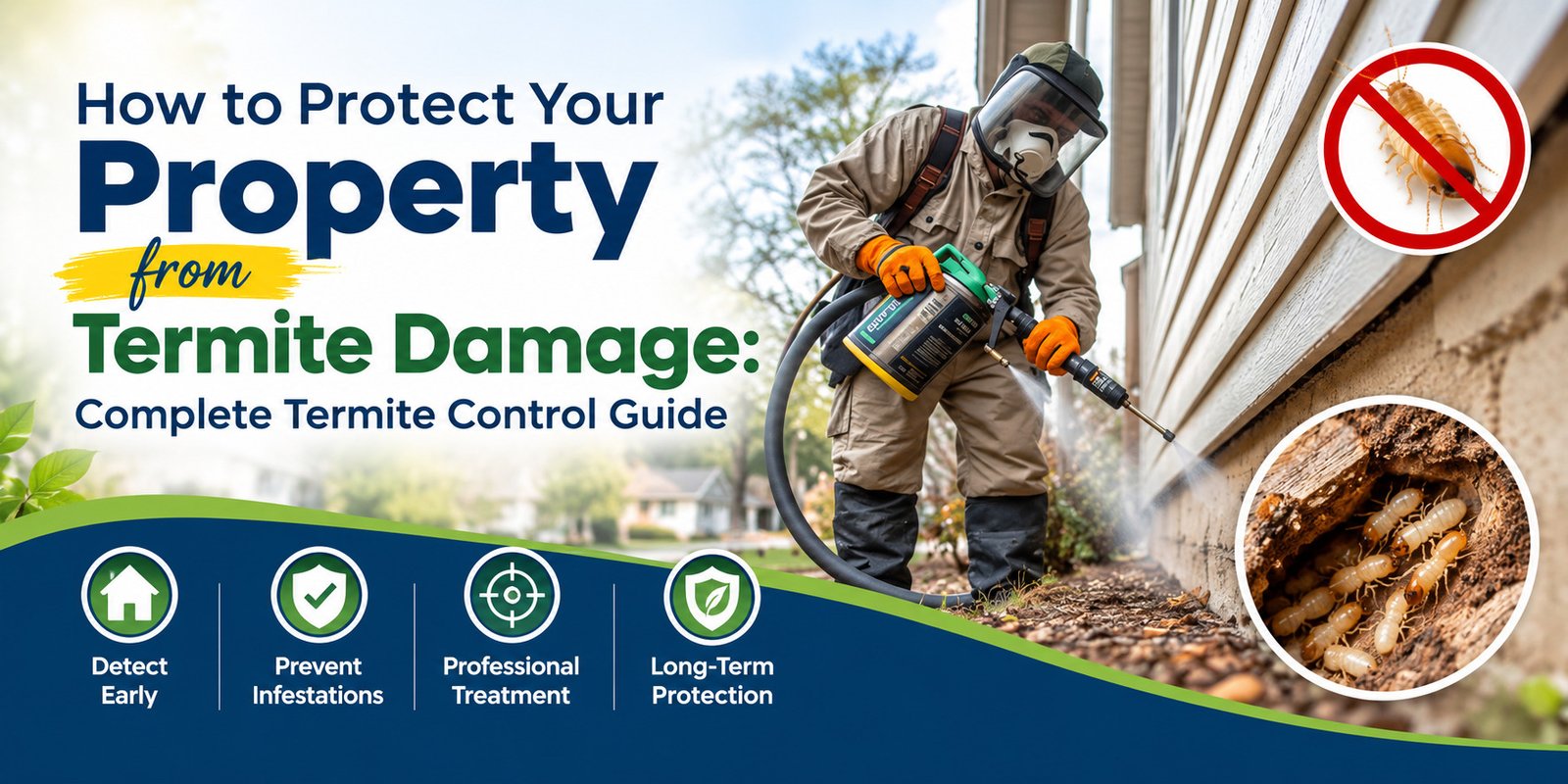
How to Protect Your Property from Termite Damage: Complete Termite Control Guide
Termites are small insects, but they can create major problems for homes, offices, commercial buildings and other properties. They feed on cellulose-based materials, including wood, and can remain hidden for long periods before visible damage is noticed.
Termite activity may occur around wooden doors, furniture, cupboards, flooring, walls, foundations and other areas where moisture and suitable food sources are available. In many cases, property owners discover an infestation only after noticing damaged wood, mud tubes, discarded wings or other warning signs.
The good news is that termite problems can be managed with early inspection, preventive measures and suitable professional treatment. The U.S. Environmental Protection Agency (EPA) recommends prevention measures such as reducing moisture, fixing leaks, maintaining drainage, reducing access points and inspecting properties regularly.
This complete termite control guide explains how to identify termite activity, prevent termite damage and choose the right treatment for your property.
What Are Termites?
Termites are social insects that live in colonies. Different types of termites can have different habits, but many termites are attracted to cellulose-containing materials such as wood and other plant-based materials.
Some termites can enter buildings from soil, while others may infest wooden materials directly. Because termite activity can remain hidden, regular inspection is important for properties with conditions that may encourage infestation.
Termites are sometimes confused with ants, especially when winged insects appear. However, termites and ants have different body shapes, antennae and wing structures. The EPA recommends learning to distinguish termites from ants when investigating a possible infestation.
Why Termite Control Is Important
Termites can damage wooden components and other cellulose-containing materials over time. If an infestation is left untreated, repair and replacement costs may increase.
Potential problems include:
- Damaged wooden doors and frames
- Hollow or weakened wood
- Damage to furniture and cupboards
- Damaged flooring
- Termite activity around foundations
- Mud tubes on walls or other surfaces
- Damage that remains hidden inside wood
- Increased property maintenance costs
Termite damage is particularly concerning because the insects may remain concealed while feeding.
Common Signs of Termite Infestation
Knowing the warning signs can help you arrange an inspection before the problem becomes more serious.
1. Mud Tubes
Mud or shelter tubes are one of the signs associated with subterranean termite activity. They may appear on foundations, walls, pillars or other structures that provide termites with a protected route.
If you notice narrow mud tubes around your property, do not ignore them. An inspection can determine whether they are active.
2. Hollow or Damaged Wood
Termites can feed inside wooden materials, leaving the outer surface looking relatively normal while the inside becomes damaged.
Wood that sounds hollow when tapped or appears unusually weak may require closer inspection. The EPA also recommends probing exposed wood for hollow areas when checking for termite activity.
3. Discarded Wings
Winged termites, sometimes called swarmers, may leave the colony to establish new colonies. Finding piles of discarded wings around windows, doors or other areas can be a warning sign.
Winged ants can look similar, so proper identification is important.
4. Termite Droppings or Frass
Some termite species leave small pellet-like droppings near areas where they are active. Finding unexplained small piles around wooden structures can be a reason to arrange a professional inspection.
5. Damaged Furniture
Termites can affect wooden furniture, cupboards, shelves and other cellulose-containing materials.
Look for:
- Small holes
- Crumbling wood
- Hollow sections
- Discoloration
- Fine dust or pellets
- Doors or drawers that become difficult to operate
6. Cracked or Damaged Wood
Unusual cracks, blistering or damaged wooden surfaces can sometimes indicate termite activity, although these signs can also have other causes.
A professional inspection is the best way to determine the source.
What Causes Termite Problems?
Termites need suitable conditions to survive and establish colonies. Certain property conditions can make buildings more attractive to them.
Moisture
Leaks, poor drainage and damp areas can create favorable conditions for termite activity. The EPA recommends fixing leaks and keeping soil around foundations dry through appropriate drainage.
Wood in Contact with Soil
Direct contact between wooden materials and soil can provide termites with easier access to structures.
Where practical, wood should be kept separated from soil and building construction should include suitable termite-prevention measures.
Wood Debris
Wood scraps, old timber, cardboard and other cellulose-containing materials left around a property can provide potential food sources.
Poor Drainage
Water collecting near foundations can increase moisture around the structure. Maintaining gutters, downspouts and drainage can help reduce these conditions.
Cracks and Openings
Small openings around foundations and utility entry points can provide access routes. Sealing suitable cracks and openings can be part of an overall prevention strategy.
How to Protect Your Property from Termites
Termite prevention starts with good property maintenance.
1. Fix Water Leaks Quickly
Repair leaking taps, pipes, bathrooms, roofs and drainage systems as soon as possible.
Avoid allowing water to remain near foundations, walls or wooden structures.
2. Maintain Proper Drainage
Make sure rainwater moves away from the building rather than collecting around the foundation.
Clean gutters and downspouts regularly and address areas where water tends to accumulate.
3. Keep Wood Away from Soil
Where possible, avoid direct contact between untreated wooden structures and soil.
Firewood, wooden waste and other timber should also be stored away from the building. The EPA specifically recommends keeping firewood and wood debris away from the home.
4. Remove Wood and Cardboard Waste
Do not allow old furniture, timber, cardboard or other cellulose-based waste to accumulate near the property.
Proper storage and disposal can reduce potential food sources.
5. Seal Suitable Entry Points
Inspect foundations, walls and areas around utility pipes for cracks or openings.
Appropriate sealing can help reduce potential access points.
6. Maintain Ventilation
Poorly ventilated areas can retain moisture. Keep suitable vents clear and address moisture problems in basements, crawl spaces, storage areas and other enclosed locations.
7. Inspect Wooden Structures
Regularly check doors, frames, cupboards, furniture, flooring and other wooden components for signs of damage.
Early detection can make termite management easier.
Professional Termite Control Treatment
When termite activity is confirmed, professional treatment may be necessary.
Termite treatment should be based on the type of termite, location of activity, building construction and level of infestation.
Professional termite management may involve one or more approaches.
Soil Treatment
For termite activity associated with soil, professional treatment may involve creating a suitable treated zone around or beneath parts of the structure.
The EPA identifies liquid soil-applied termiticides as one type of termite treatment and notes that proper application requires trained pest-management professionals.
Termite Bait Systems
Bait systems use cellulose-based material containing an appropriate insecticide. Termites consume or interact with the bait and the treatment is designed to affect the colony.
Baiting is different from simply spraying visible termites because it is intended as part of a broader colony-management strategy.
Wood Treatment
Depending on the situation, certain wood-treatment methods may be used to protect or treat wooden components.
The appropriate treatment depends on the material, construction and type of termite problem.
Physical Barriers
Physical termite barriers can help prevent termites from accessing a building. Some barrier systems are installed during construction, while other exclusion or protection measures may be appropriate for existing structures.
The EPA notes that physical barriers can be part of termite prevention.
Pre-Construction Termite Protection
Termite prevention can begin before a building is completed.
During construction, suitable design and construction practices can help reduce termite access. Depending on the building and local construction requirements, measures may include:
- Suitable soil treatment
- Physical termite barriers
- Proper foundation design
- Separation of wood from soil
- Moisture management
- Protection around service penetrations
Planning termite protection during construction can be easier than correcting termite entry points after a building is completed.
Post-Construction Termite Treatment
Existing properties may require post-construction termite treatment when active infestation is identified.
The treatment method depends on the construction of the building and where termite activity is found.
A professional inspection should identify areas such as:
- Foundation
- Soil around the building
- Wooden frames
- Doors
- Furniture
- Flooring
- Wall cavities
- Moisture-prone areas
- Utility entry points
A treatment plan can then be selected according to the property.
Why DIY Termite Treatment May Not Be Enough
Homeowners may find termite sprays and other products that kill insects on contact. However, killing visible termites does not necessarily mean the colony has been eliminated.
Termites can remain hidden inside structures or underground. The EPA notes that products that only kill termites they directly contact are not necessarily products intended to provide structural protection.
DIY treatment may therefore provide only temporary relief if the underlying infestation and access routes are not addressed.
For an established infestation, professional inspection and treatment can help identify the source and select an appropriate control strategy.
Integrated Termite Management
Effective pest management does not always mean relying on chemical treatment alone.
Integrated Pest Management, or IPM, combines preventive practices, monitoring, environmental changes and appropriate pest-control methods. The EPA describes IPM as an approach that considers the pest’s life cycle and environment while using suitable control options with the goal of reducing risks to people, property and the environment.
For termite prevention, this can mean combining:
- Regular inspections
- Moisture control
- Drainage maintenance
- Removal of wood debris
- Structural repairs
- Physical barriers
- Monitoring
- Appropriate professional treatment
How Often Should You Check for Termites?
There is no single inspection schedule that is ideal for every property. Properties with previous termite problems, moisture issues, extensive wooden structures or other risk factors may benefit from more frequent monitoring.
Regular visual checks can help identify early warning signs such as mud tubes, damaged wood, discarded wings or unexplained wood deterioration.
If you notice suspicious signs, arrange an inspection instead of waiting for visible damage to become extensive.
Termite Control for Homes
Residential properties can develop termite problems around:
- Wooden doors
- Window frames
- Cupboards
- Furniture
- Flooring
- Roof structures
- Wall areas
- Foundations
- Garden structures
Homeowners should pay particular attention to areas where wood and moisture are present.
Keeping the property dry, maintaining drainage and inspecting wooden components can help reduce termite risks.
Termite Control for Offices and Commercial Buildings
Commercial properties can also experience termite problems.
Offices, shops, warehouses, restaurants, hotels, factories and other commercial buildings may contain wooden furniture, storage materials, structural components or moisture-prone areas.
A professional termite inspection can help identify potential problem areas and develop an appropriate treatment and monitoring plan.
How to Choose a Termite Control Service
Choosing a pest control company based only on the lowest price may not be the best approach.
Before hiring a service provider, consider:
Experience
Choose a company with experience handling termite problems in properties similar to yours.
Inspection
A professional should inspect the property and identify the likely source and affected areas.
Treatment Plan
Ask what treatment method is being recommended and why it is suitable for your property.
Safety Instructions
If pesticides are used, follow the product label and all instructions provided by the service professional. The EPA recommends asking about the products used, treatment precautions and re-entry requirements.
Follow-Up
Ask whether the service includes follow-up inspections or monitoring and understand exactly what any warranty or guarantee covers.
Written Details
A clear service document can help you understand the treatment, areas covered, precautions and follow-up requirements.
What to Do After Termite Treatment
Termite control does not end immediately after treatment.
Continue good property-maintenance practices such as:
- Repairing leaks
- Maintaining drainage
- Removing wood debris
- Keeping storage areas clean
- Checking wooden structures
- Avoiding unnecessary moisture
- Following professional follow-up recommendations
If new termite signs appear after treatment, contact the service provider for an inspection rather than applying additional chemicals yourself.
Common Termite Control Mistakes to Avoid
Ignoring Small Signs
A small mud tube or a few discarded wings may be easy to overlook, but early signs deserve attention.
Treating Only Visible Termites
Visible termites may represent only a small part of the infestation.
Ignoring Moisture
A treatment may be less effective as a long-term prevention strategy if moisture problems and other favorable conditions remain.
Storing Wood Near the Building
Wood, timber and debris stored next to the property can increase potential termite food sources.
Using Too Much Chemical
More pesticide does not automatically mean better termite control. Pesticides should only be used according to their label and by appropriate professionals.
Choosing a Service Only on Price
Termite control can involve inspection, specialized equipment, treatment and follow-up. A very low-cost service may not provide the same scope of work as a properly planned treatment.
Benefits of Professional Termite Control
Professional termite management can help property owners:
- Detect termite activity
- Identify vulnerable areas
- Reduce ongoing termite activity
- Protect wooden structures
- Address potential entry points
- Develop a prevention plan
- Reduce the risk of recurring problems
- Monitor the property after treatment
The exact results depend on the termite species, infestation level, building structure and treatment method.
When Should You Call a Termite Control Professional?
Contact a professional if you notice:
- Mud tubes
- Damaged or hollow wood
- Discarded termite wings
- Repeated termite activity
- Damaged wooden doors or frames
- Termites around foundations
- Unexplained wood deterioration
- Termite activity after previous treatment
Early inspection can help identify the problem before damage becomes more extensive.
Conclusion
Termites can remain hidden for long periods, making early detection and prevention important for property owners. Moisture, poor drainage, wood-to-soil contact, wood debris and building openings can create conditions that encourage termite activity.
Protecting your property starts with simple maintenance: fix leaks, maintain drainage, remove wood debris, keep wood away from soil, seal suitable openings and inspect wooden structures regularly.
If termite activity is already present, professional inspection can help determine the appropriate treatment. Depending on the property and infestation, termite management may involve soil treatment, bait systems, wood treatment, physical barriers or a combination of preventive and control measures.
A long-term termite management strategy should focus not only on eliminating existing activity but also on reducing the conditions that allow termites to return.
If you are looking for reliable Termite Control Treatment Service in Surat, professional inspection and treatment can help identify termite activity and protect your property from further damage. Ultra Pest Solution also provides professional termite control treatment services in Vadodara and termite control treatment services in Vapi for residential, commercial and industrial properties. Our team recommends suitable termite control solutions based on the infestation level, property structure and specific treatment requirements.
FAQs
1. What are the First Signs of Termites?
Common warning signs include mud tubes, hollow or damaged wood, discarded wings, termite droppings and unexplained damage to wooden structures.
2. Can Termites Damage a House?
Yes. Termites can damage wood and other cellulose-based materials. If activity continues for a long period, the damage can become significant.
3. How Can I Prevent Termites at Home?
Keep the property dry, repair leaks, maintain drainage, remove wood debris, avoid direct wood-to-soil contact and inspect the property regularly.
4. Are Termites Active Only in Old Buildings?
No. Termite activity can occur in both new and old properties when suitable conditions exist.
5. Does Termite Treatment Completely Prevent Future Termites?
No treatment should be described as a permanent guarantee against all future termite activity. Effective termite management combines appropriate treatment with regular inspection and property maintenance.
6. Is Professional Termite Treatment Better than DIY Treatment?
For an established infestation, professional inspection and treatment can be beneficial because termites may be hidden inside structures or underground. The appropriate method depends on the property and termite activity.
7. How Long Does Termite Treatment Take?
Treatment time varies according to the size and construction of the property, the treatment method and the extent of termite activity. A professional inspection is needed to estimate the work required.
8. Should I Wait until I see Termites Before Calling a Professional?
No. Termites can remain hidden. Signs such as mud tubes, damaged wood or discarded wings can justify an inspection even when live termites are not visible.
9. Can Moisture Attract Termites?
Moisture can create favorable conditions for termite activity. Fixing leaks and improving drainage are important parts of termite prevention.
10. What is the Best way to Protect a Property from Termites?
The best approach depends on the property and termite situation. Generally, combining regular inspection, moisture management, structural maintenance, prevention measures and appropriate professional treatment provides a stronger approach than relying on one method alone.